
Does Early Spay/Neuter Increase Cruciate Ligament Disease Risk?
At Stannyfield, we contractually require our families to delay spay and neuter until their dog reaches maturity.
We do not base our decisions on a single paper. We look at the broader body of evidence, breed structure, athletic expectations, and long-term health outcomes. That said, a recent large-scale study published in the Journal of Small Animal Practice adds meaningful data to the conversation around orthopedic risk and timing of gonadectomy.
What the Study Found
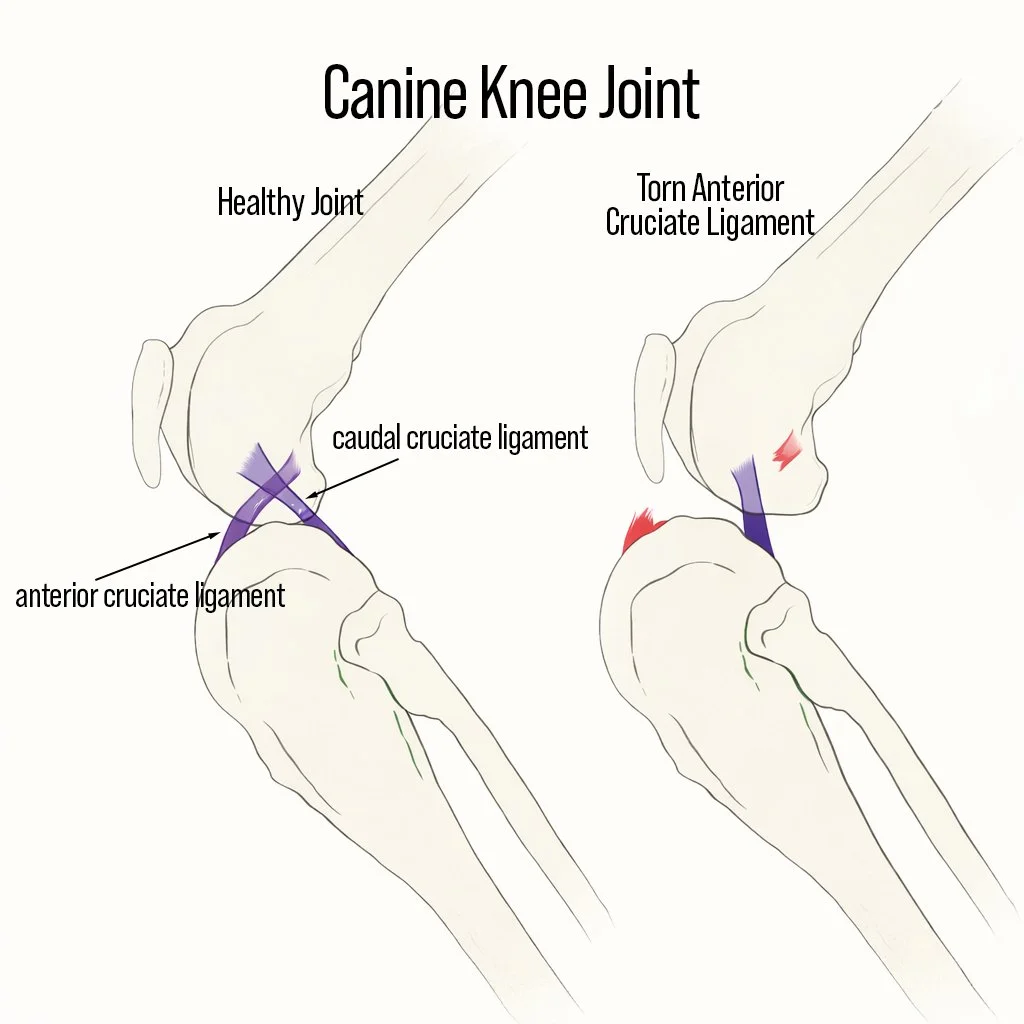
The researchers evaluated the association between age at gonadectomy and cranial cruciate ligament disease, CrCLD. They found that risk was highest in dogs neutered at younger ages, and decreased as the duration of natural hormone exposure increased.
Importantly, the relationship was described as nonlinear. That means risk does not simply decline steadily with each additional month of age. Instead, there appears to be a developmental window during which early removal of gonadal hormones may influence joint formation and long-term ligament stability.
In practical terms, hormones matter during growth.
Why This Matters for Our Breeds
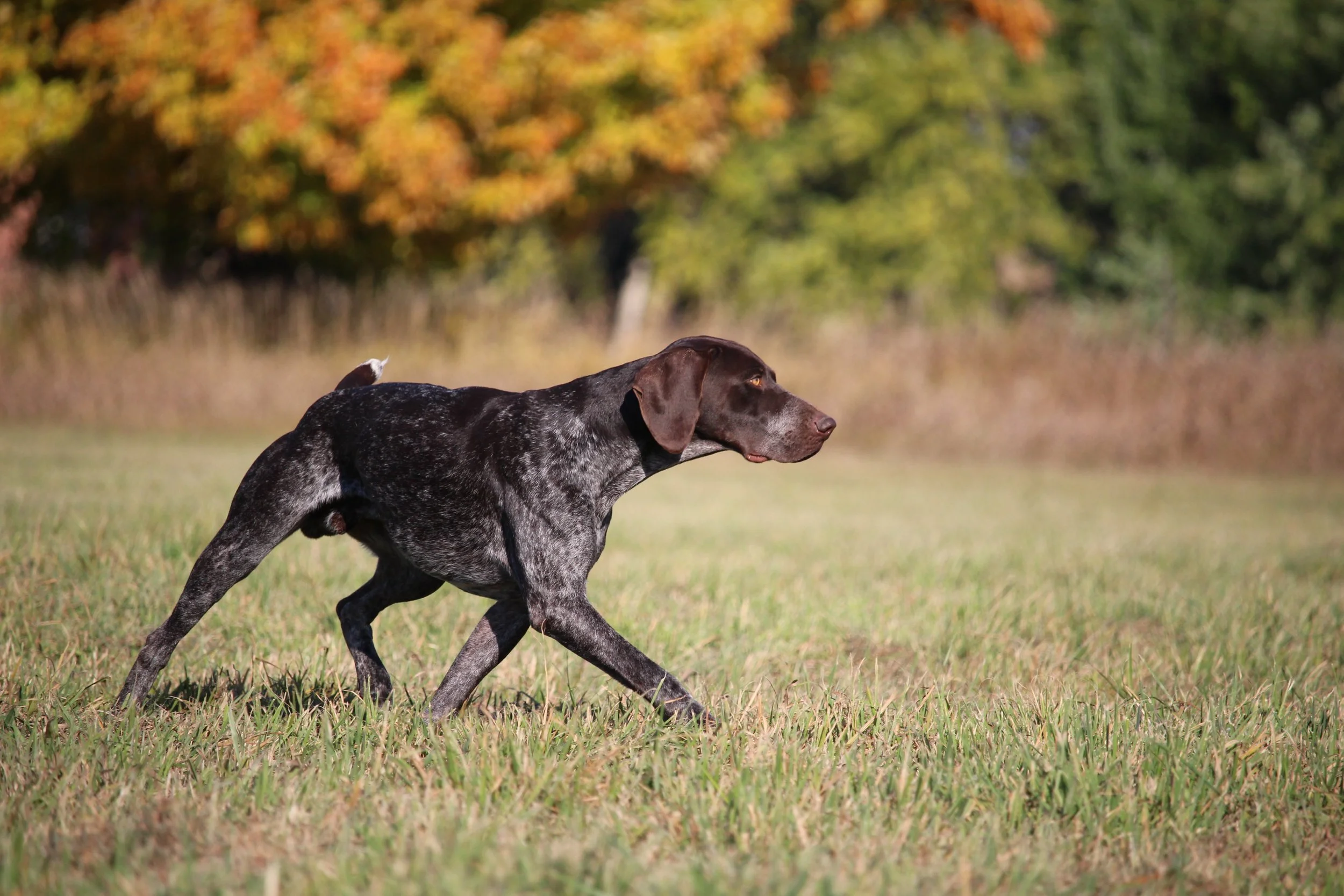
Both Welsh Springer Spaniels and German Shorthaired Pointers are athletic, structurally active breeds. They are expected to run, turn, jump, retrieve, hike, and remain physically capable well into later life.
Cranial cruciate ligament disease is painful, expensive to treat, and often career-ending for working or sporting dogs. Even in companion homes, it significantly affects quality of life.
For us, this is not about convenience, it’s about preserving structural soundness and longevity.
Our Policy Remains the Same
This study does not change our requirement to delay spay/neuter, but rather reinforces why we have it.
We will continue to review emerging research, consider breed-specific data, and make decisions grounded in long-term health and functional soundness. As always, our priority is raising dogs who can live active, joyful lives for years to come.
References
British Small Animal Veterinary Association. (2026, February 9). Risk of cranial cruciate ligament disease is highest in dogs that undergo early gonadectomy, study shows. https://www.bsava.com/article/risk-of-cranial-cruciate-ligament-disease-is-highest-in-dogs-that-undergo-early-gonadectomy-study-shows/
Low, D. (2025). Cumulative gonadal hormone exposure is nonlinearly associated with risk of canine cranial cruciate ligament disease: A generalised additive model analysis of 20,590 dogs (1988–2023). Journal of Small Animal Practice. Advance online publication. https://doi.org/10.1111/jsap.70023